System Boundaries And Mapping Examples: A Practical 360-Degree Guide
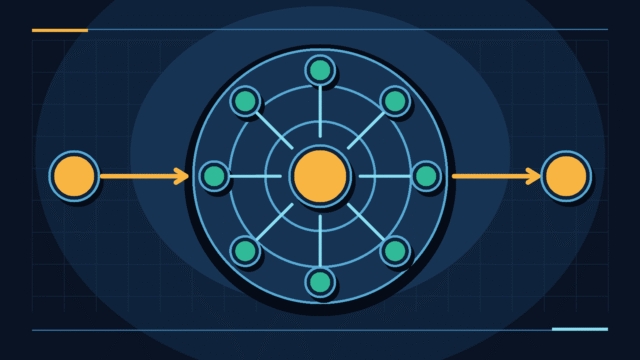
Define useful system boundaries and map relationships through six worked scenarios, boundary comparisons, stock and flow calculations and an adaptable worksheet.
Example Solutions
Define useful system boundaries and map relationships through six worked scenarios, boundary comparisons, stock and flow calculations and an adaptable worksheet.
Compare competing objectives with six worked trade-off examples, dominance screening, incremental effort, sensitivity thresholds and transparent choice records.
Investigate underlying causes with six worked scenarios, evidence tests, causal chains, barrier analysis and an original corrective-action worksheet.
Compare solution cases across several dimensions, test alternative explanations, assess stakeholder effects and document transferable lessons.
Follow six original design thinking scenarios from user research through problem definition, prototype experiments, accessibility checks and evidence-based iteration.
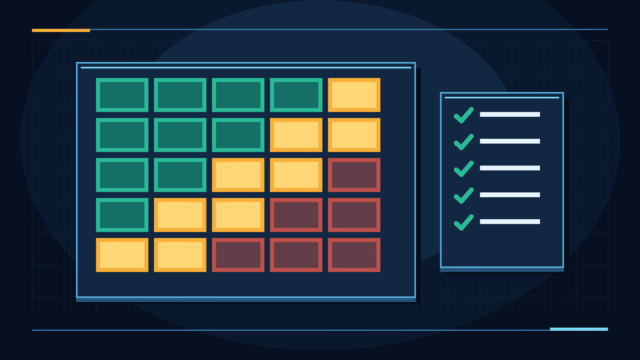
Assess uncertainty with six hypothetical scenarios, risk matrices, evidence checks, residual risk calculations and practical control verification.
Map the actual flow of work, identify handoffs and waiting, compare current and future states, and validate improvements with six practical examples.
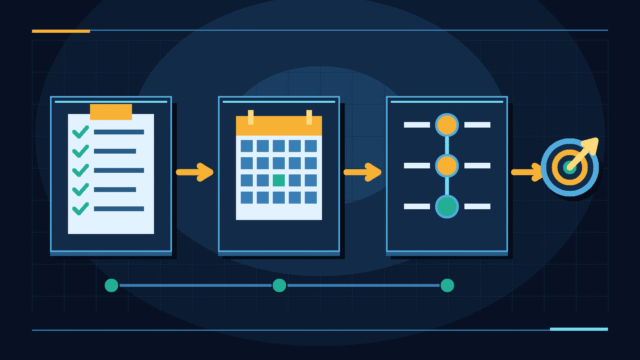
Create verifiable action plans with six worked examples, accountable owners, capacity checks, acceptance criteria and a reusable action register.
Learn causal loop diagramming through six original feedback examples, polarity checks, delays, a numerical backlog model and a reusable worksheet.
Build and audit decision matrices using worked rating scales, normalized quantitative data, weight sensitivity, eligibility gates and transparent selection rules.