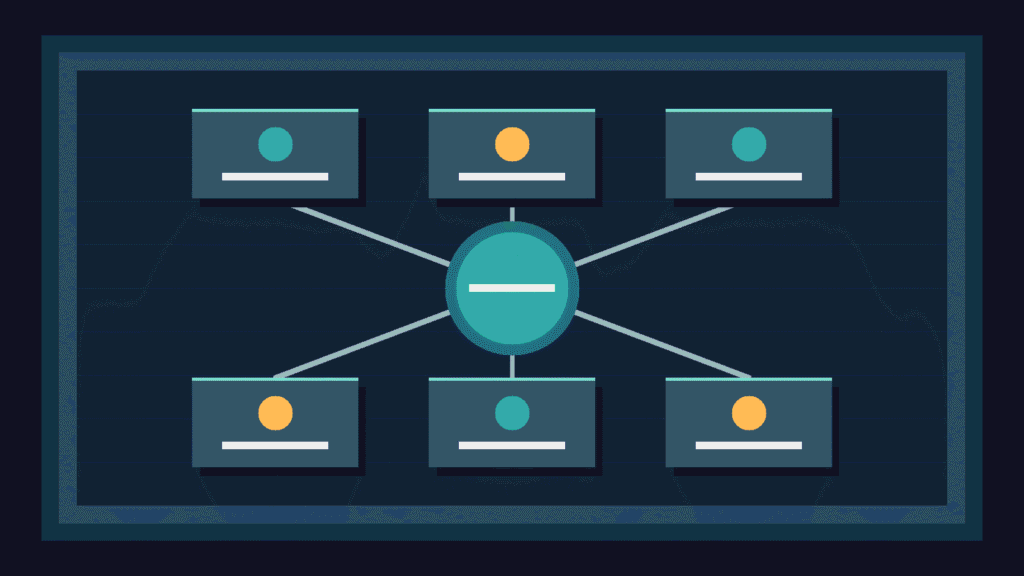
CATWOE analysis is a structured way to examine a purposeful human activity system through six perspectives: customers, actors, transformation, worldview, owner, and environmental constraints. It is especially helpful when people disagree about what a problem actually is, not merely how to solve an agreed technical problem. The technique belongs to Soft Systems Methodology, developed through the work of Peter Checkland and colleagues. Rather than assume a single objectively correct organizational system, it helps participants articulate different meaningful descriptions of a situation and learn from their differences.
Quick Answer
CATWOE examines six perspectives to develop a meaningful root definition. Start with the transformation and worldview, identify affected customers and responsible actors, clarify ownership and constraints, then compare alternative activity models.
Table Of Contents
- The Six Components And Their Practical Meaning
- Worked Example: A Community Language Learning Program
- Turning The Analysis Into A Root Definition
- Developing Alternative Root Definitions
- From Root Definition To A Conceptual Activity Model
- Worked Example: A Municipal Recycling Drop-Off Service
- Checking Performance Without Reducing The System To One Metric
- A Facilitator’s Worksheet And Quality Checks
- Frequently Asked Questions
The Six Components And Their Practical Meaning
The University of Cambridge overview of Soft Systems Methodology explains how root definitions and conceptual activity models support inquiry into complex situations. CATWOE provides a check on the substance of a root definition. Its six components do not necessarily correspond to six different people. A person might benefit from a transformation, participate in it, and exercise authority over part of it, but these are distinct analytical roles.
| Component | Question |
|---|---|
| Customers | Who Benefits Or Suffers From The Transformation? |
| Actors | Who Carries Out The Activities? |
| Transformation | What Input State Becomes What Output State? |
| Worldview | What Perspective Makes That Transformation Meaningful? |
| Owner | Who Can Stop Or Authorize The System? |
| Environmental Constraints | What Conditions Must The System Take As Given? |
A transformation is the essential change in state that a purposeful system brings about. It is not a list of actions. For example, an unallocated suitable room becomes a confirmed accessible meeting space for a scheduled group. The booking form, calendar check, and confirmation message are possible activities that realize this change; they are not themselves the transformation.
The worldview gives the reason why the transformation matters from the perspective being modeled. A booking service might be understood as a way to make scarce rooms available fairly, a means of increasing utilization, or an administrative mechanism that reduces coordination time. Each framing points toward a different purposeful activity model. The same physical organization can be examined through all three without declaring any one of them the only legitimate interpretation.
Worked Example: A Community Language Learning Program
Imagine a community center that hosts evening language classes for adults. The classes are popular, but volunteers regularly receive incomplete enrollment requests, learners arrive at unsuitable sessions, and some available seats go unused. The coordinator believes that a new registration website will solve the problem. Tutors argue that the main difficulty is the mismatch between class levels and learner needs. Learners say they cannot easily find sessions that fit their work schedules.
This situation is not sufficiently understood to jump directly to a software specification. A useful inquiry begins by describing the transformation that stakeholders are trying to achieve. One possible transformation is the conversion of an unplaced learner with a stated need into a learner allocated to a suitable available class with clear information about attendance.
Start with customers. The learners are obvious potential beneficiaries. Tutors can also benefit from more suitable allocations, while people who cannot use an online form may suffer if the center removes alternative enrollment channels. A learner who is repeatedly redirected without explanation is an affected customer even if the program does not charge a fee.
Actors include enrollment volunteers, tutors who define placement requirements, the scheduling coordinator, and the person responsible for learner communications. These actors have different capabilities and workloads. A system model that assumes volunteers can carry out an extensive assessment for every applicant may be unrealistic if they have only two hours each week.
The transformation needs both a meaningful starting state and a resulting state. A list of activities such as collecting names, matching times, and sending emails does not establish what change the system exists to produce. Express the starting state as an unplaced learner with a learning goal, and the output state as a learner matched to a suitable class or given a clear alternative when no suitable place exists.
The worldview might be that access to education improves when enrollment coordinates learner needs, available capacity, and tutor requirements fairly. An alternative worldview could emphasize maximizing use of funded seats. These viewpoints are not identical, particularly when a learner needs a small accessible session that costs more per attendee.
The owner is the entity with legitimate authority to stop or materially redesign the system. In this example, the governing committee can suspend the program, determine registration policy, and authorize the budget. The day-to-day enrollment coordinator may have significant discretion without having that ultimate authority.
Environmental constraints include the building’s opening hours, existing room capacities, tutor availability outside the coordinator’s direct control, funding restrictions, accessibility requirements, and applicable privacy obligations. Some may be negotiable at a wider organizational level, but they are treated as given within the current inquiry boundary.
| CATWOE Element | Community Class Example |
|---|---|
| Customers | Learners, Tutors And People Affected By Allocation Rules |
| Actors | Enrollment Volunteers, Tutors And Scheduling Coordinator |
| Transformation | Unplaced Learner To Suitable Confirmed Placement Or Clear Alternative |
| Worldview | Equitable Coordination Improves Access And Learning Suitability |
| Owner | Governing Committee With Authority Over Program |
| Environment | Hours, Capacity, Funding, Accessibility And Privacy Constraints |
Turning The Analysis Into A Root Definition
A root definition is a compact statement of the purposeful activity system under consideration. It should identify the transformation, explain why it is meaningful, and make relevant actors, beneficiaries, authority, and constraints understandable. The statement is not necessarily a prediction about the current organization. It describes a system of activities that would be relevant from the stated worldview.
For the community class example, a root definition might be: a governing-committee-authorized system operated by enrollment volunteers and tutors to convert unplaced learners into appropriately allocated learners or clearly informed alternative applicants by assessing needs, matching suitable capacity, and confirming arrangements, because coordinated and accessible placement supports meaningful participation, within available hours, resources, and applicable obligations.
The definition makes its purpose explicit. It also identifies possible exclusions: delivering lessons and assessing educational progress after enrollment may be relevant connected systems, but they do not have to be inside the allocation system currently modeled. Use system boundary mapping to document where these connected responsibilities begin and end.
A useful test is to ask whether the proposed transformation can be recognized without mentioning a particular tool. If a root definition reads as an instruction to install booking software, the inquiry may have prematurely committed to a solution. A registration website might be appropriate, but so might a redesigned volunteer intake process, clearer tutor availability information, or a shared telephone and online allocation procedure.
Developing Alternative Root Definitions
Suppose the same community center receives a funding grant based partly on participant numbers. The governing committee wants to reduce unused seats. A second root definition may describe a system that transforms unallocated teaching capacity into appropriately occupied teaching capacity, because making effective use of publicly supported resources improves program sustainability.
From this worldview, customers include the center, learners, funding bodies, and people waiting for a place. Actors might include tutors who communicate capacity, volunteers who maintain waiting lists, and the coordinator who fills vacancies. The transformation begins with suitable available capacity rather than an individual unplaced learner. The owner remains the governing committee, and the constraints include legitimate placement requirements and funding conditions.
This second description may lead to activities such as checking attendance intentions, releasing unused reservations, maintaining an accessible waiting list, and monitoring vacancy patterns. The first description may lead to activities such as clarifying learner goals, supporting alternative communication, and resolving placement mismatches.
The difference is valuable. If the team treats seat utilization as its only objective, it could allocate learners to unsuitable classes simply to fill rooms. If it treats individual preferences without considering capacity, it could reserve scarce places indefinitely for people who are unlikely to attend. Neither outcome follows inevitably from CATWOE; the analysis helps reveal the tensions so that participants can discuss desirable and feasible changes.
Methods such as decision quality assessment can help the team document competing objectives and uncertainty. Do not combine different worldviews into a vague statement simply to avoid disagreement. Preserve contrasting root definitions until the group understands the consequences of each.
From Root Definition To A Conceptual Activity Model
Once the team agrees that a root definition is meaningful enough to explore, construct a conceptual model of the activities necessary to realize its transformation. For the learner-centered model, the minimum purposeful activities might include receiving a learner’s request, establishing needs and access requirements, obtaining current class capacity and suitability information, evaluating available options, communicating the placement or alternative, monitoring the outcome, and adapting the allocation approach when repeated problems occur.
The activities are logically connected. The team cannot match a learner reliably without trustworthy class capacity and suitability information. A communication activity is necessary because an allocation that exists only in a spreadsheet has not produced a clearly informed learner. Monitoring is also necessary because a system that cannot detect repeated mismatches cannot reliably correct its own operating assumptions.
This model differs from a description of what the center currently does. It is a thinking device. Compare it with current practices and ask what occurs, what does not occur, what is performed differently, and why. An apparent gap is a subject for inquiry, not automatic proof that a particular activity must be installed exactly as drawn.
For example, the current procedure may have no explicit activity for informing tutors about learners’ language goals. The conceptual model suggests a need for relevant suitability information. The participants can examine whether tutors actually need this information, how much is appropriate to share, and whether an alternative process could achieve the same purpose with less data collection. A swimlane diagram can subsequently clarify how the agreed operational responsibilities cross role boundaries.
Worked Example: A Municipal Recycling Drop-Off Service
Consider a municipality operating a shared recycling drop-off location. Residents complain that sorting instructions are confusing. Collection crews report contamination, and neighboring businesses worry about deliveries blocking access. One useful root definition describes a municipality-authorized system operated by site attendants and collection teams to transform uncertain or mixed recyclable deposits into correctly accepted sorted material and clearly redirected unsuitable deposits, because understandable sorting improves material recovery and the usability of shared space.
Customers include residents, collection crews, nearby businesses, and organizations receiving the sorted material. People inconvenienced by queueing are customers in the analytical sense even if they never deposit recycling. Actors include attendants, collection drivers, information designers, and dispatch coordinators. The owner is the responsible municipal authority. Environmental constraints may include contracted collection times, physical site boundaries, material acceptance rules, road access limitations, and funding.
An alternative worldview emphasizes neighborhood accessibility rather than material recovery alone. From that perspective, the transformation could convert congested shared access into reliably usable access for both recycling visitors and neighboring businesses. The models overlap but produce different questions about signs, vehicle movement, staffing, and collection timing. A design that improves sorting accuracy while causing an unacceptable queue might perform well under one narrow measure and poorly under another.
The center should investigate the actual conditions through observation and discussion. A gemba walk can reveal how people encounter signage and where crews experience difficulties. A critical incident analysis can capture detailed examples of successful and unsuccessful deposits. These complementary methods ground the inquiry without replacing the exploration of differing perspectives.
Checking Performance Without Reducing The System To One Metric
A conceptual activity model can incorporate checks on whether the transformation occurs, whether resources are used efficiently, and whether the transformation serves the wider purpose. In the learning program, efficacy could concern whether learners actually receive suitable allocations or clear alternatives. Efficiency could concern volunteer time and the effort required to resolve each request. Effectiveness could concern whether the arrangement supports longer-term participation and educational access.
These measures need operational definitions. Count a confirmed allocation only when both the learner and tutor receive the necessary information, if that is the agreed definition of confirmation. Record applicants who cannot find an appropriate session rather than exclude them from the denominator. Track whether apparently successful placements lead to repeated transfers or early withdrawals.
Avoid assuming that more detailed reporting always improves the system. Collecting extensive personal information could discourage people from applying or increase privacy risks. Stakeholders should assess what evidence is necessary and proportionate. The article on balanced scorecards provides a complementary approach for connecting several performance perspectives, but a scorecard does not resolve whose worldview determines the purpose of the activity system.
A Facilitator’s Worksheet And Quality Checks
Create a separate worksheet for each relevant worldview. Record the initial problem situation, customers who benefit or suffer, actors, input and output states, the justification for the transformation, the owner, constraints, the root definition, and essential conceptual activities. Mark claims as observed, reported by participants, inferred, or requiring investigation. This distinction prevents an apparently complete worksheet from concealing uncertain information.
Ask participants to challenge the owner identification. A senior person who approves individual expenses may not be able to stop the wider system. Conversely, an external funding body may impose restrictions without directly owning the local activity system. Clarify the boundary and authority rather than attach the owner label to whichever stakeholder has the highest job title.
Check the transformation by removing the proposed mechanism. If the statement becomes meaningless without a specific technology, it probably describes a solution rather than a change in state. Check the worldview by asking why that change is worth making. Check the customer list by identifying people who could lose access, bear extra work, or experience unwanted consequences. Check the constraints by distinguishing conditions treated as fixed for this inquiry from problems the proposed system is explicitly meant to change.
Finally, use the root definitions and conceptual models to structure discussion about changes that participants consider both systemically desirable and culturally feasible. Document unresolved disagreements. Specify who will test the agreed changes and how results will be reviewed. CATWOE is valuable not because six completed boxes make a situation objectively simple, but because the boxes make purposes, perspectives, and assumptions visible enough for informed action.
Frequently Asked Questions
What does CATWOE stand for?
Customers, actors, transformation, worldview, owner, and environmental constraints.
What is CATWOE used for?
It helps articulate relevant purposeful activity systems and develop root definitions in Soft Systems Methodology.
Are customers always paying clients?
Customers include beneficiaries and people adversely affected by the transformation, whether or not payment occurs.
How are actors different from owners?
Actors carry out activities; owners have authority to stop or materially authorize the system.
What is a CATWOE transformation?
A purposeful change from a defined input state to a defined output state.
What is worldview?
It is the perspective that makes the transformation meaningful and worth examining.
Can one situation have several CATWOE analyses?
Yes, contrasting worldviews may support different root definitions and conceptual activity models.
Is CATWOE a process map?
It is a root-definition aid. A process map usually represents actual or proposed operational sequences.
How are environmental constraints identified?
Define the inquiry boundary and identify conditions treated as given within that boundary.
What happens after CATWOE analysis?
Develop relevant conceptual activity models, compare them with the situation, and discuss desirable and feasible changes.